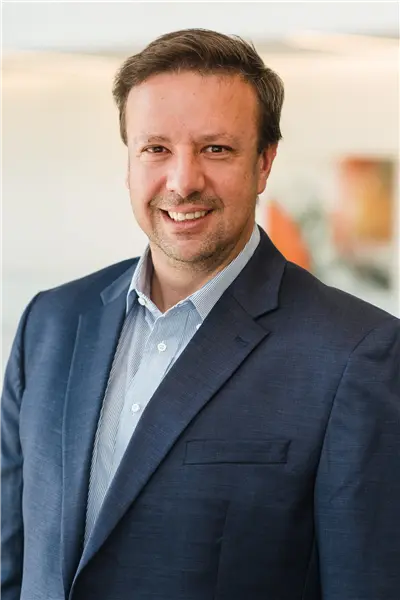
Jason Meyer, PhD
A. Donald Merritt Professor of Medical & Molecular Genetics
Adjunct Professor of Biochemistry, Molecular Biology & Pharmacology
Adjunct Professor of Ophthalmology
- Phone
- (317) 274-1040
- Address
-
NB 400B
Department of Medical and Molecular Genetics
Indianapolis, IN 46202 - PubMed:
-

Bio
Dr. Meyer received his bachelor's degree from Colgate University and his doctoral degree from the University of Missouri. He completed his postdoctoral training at the University of Wisconsin, where he developed the first methods to differentiate human pluripotent stem cells into retinal organoids, work that has since become foundational to the field. He is currently the A. Donald Merritt Professor of Medical and Molecular Genetics at Indiana University School of Medicine, with adjunct appointments in Pharmacology and Toxicology as well as Ophthalmology. At the Stark Neurosciences Research Institute, he directs the Stem Cell Research Group and serves as Principal Investigator of the NIH-funded Center for Microphysiological Systems modeling of Alzheimer's Disease and of an NEI-funded Audacious Goals Initiative project. His research program uses human pluripotent stem cells as in vitro models of neurodegeneration, integrating iPS cell reprogramming, CRISPR/Cas9 gene editing, and microphysiological systems as New Approach Methodologies (NAMs) for disease modeling and drug discovery. Ongoing work in his laboratory examines neurodegeneration associated with glaucoma and Alzheimer's disease, with a particular emphasis on neuron–glia interactions and the roles of astrocytes and microglia in driving neuronal dysfunction and degeneration.
Key Publications
Gomes C, Huang KC, Lavekar SS, Harkin J, Prosser CG, Fang Y, Kalem C, Oblak A, Zhang C, Meyer JS (2025), Modeling human retinal ganglion cell axonal outgrowth, development, and pathology using pluripotent stem cell-based microfluidic platforms, Proceedings of the National Academy of Sciences, 122(37):e2423682122.
Bedford LM, Tutrow KD, Hooper K, Messenger EJ, Hernandez M, Lamb BT, Meyer JS, Richardson TI, Bissel SJ (2025), Alzheimer’s disease–associated PLCG2 variants alter microglial state and function in human induced pluripotent stem cell–derived microglia-like cells, Alzheimer’s & Dementia, 21(10):e70772.
Harkin J, Peña KH, Gomes C, Hernandez M, Lavekar SS, So K, Lentsch K, Feder EM, Morrow S, Huang KC, Tutrow KD, Morris A, Zhang C, Meyer JS (2024), A highly reproducible and efficient method for retinal organoid differentiation from human pluripotent stem cells, Proceedings of the National Academy of Sciences, 121(25):e2317285121.
Screven LA, Pantazis CB, Andersh KM, Hong S, Vitale D, Lara E, Ku RY, Heutink P, Meyer JS, Faber K, Nho K, Saykin AJ, Foroud TM, Nalls MA, Blauwendraat C, Singleton A, Narayan PS (2024), Harnessing diversity to study Alzheimer’s disease: A new iPSC resource from the NIH CARD and ADNI, Neuron, 112(5):694-697.
Lavekar SS, Harkin J, Hernandez M, Gomes C, Patil S, Huang KC, Puntambekar SS, Lamb BT, Meyer JS (2023), Development of a three-dimensional organoid model to explore early retinal phenotypes associated with Alzheimer’s disease, Scientific Reports, 13(1):13827.
Gomes C*, VanderWall KB*, Pan Y, Lu X, Lavekar SS, Huang KC, Fligor CM, Harkin J, Zhang C, Cummins TR, Meyer JS (2022), Astrocytes modulate neurodegenerative phenotypes associated with glaucoma in OPTN(E50K) human stem cell-derived retinal ganglion cells, Stem Cell Reports, 17(7):1636-1649.
Fligor CM, Lavekar SS, Harkin J, Shields PK, VanderWall KB, Huang KC, Gomes C, Meyer JS (2021), Extension of retinofugal projections in an assembled model of human pluripotent stem cell-derived organoids, Stem Cell Reports, 16(9):2228-2241.
VanderWall KB, Huang KC, Pan Y, Lavekar SS, Fligor CM, Allsop AR, Lentsch KA, Dang P, Zhang C, Tseng HC, Cummins TR, Meyer JS (2020), Retinal Ganglion Cells With a Glaucoma OPTN(E50K) Mutation Exhibit Neurodegenerative Phenotypes when Derived From Three-Dimensional Retinal Organoids, Stem Cell Reports, 15(1):52-66.
VanderWall KB, Vij R, Ohlemacher SK, Sridhar A, Feder EM, Edler MC, Baucum AJ, Cummins TR, and Meyer JS (2019), Astrocytes Regulate the Development and Maturation of Retinal Ganglion Cells Derived from Human Pluripotent Stem Cells, Stem Cell Reports, 12(2):201-12.
Fligor CM, Langer KB, Sridhar A, Ren Y, Shields PK, Edler MC, Ohlemacher SK, Sluch VM, Zack DJ, Zhang C, Suter DM, and Meyer JS (2018), Three-Dimensional Retinal Organoids Facilitate the Investigation of Retinal Ganglion Cell Development, Organization, and Neurite Outgrowth from Human Pluripotent Stem Cells, Scientific Reports, 8(1):14520.
Langer KB, Ohlemacher SK, Phillips MJ, Fligor CM, Jiang P, Gamm DM, and Meyer JS (2018), Retinal Ganglion Cell Diversity and Subtype Specification from Human Pluripotent Stem Cells, Stem Cell Reports, 10(4):1282-93.
Ohlemacher SK, Sridhar A, Xiao Y, Hochstetler A, Sarfarazi M, Cummins TR, and Meyer JS (2016), Stepwise Differentiation of Retinal Ganglion Cells from Human Pluripotent Stem Cells Facilitates Analysis of Glaucomatous Neurodegeneration, Stem Cells, 34(6):1553-62.
Zhong X, Gutierrez C, Xue T, Hampton C, Vergara MN, Cao LH, Peters A, Park TS, Zambidis ET, Meyer JS, Gamm DM, Yau KW, and Canto-Soler MV (2014), Generation of three-dimensional retinal tissue with functional photoreceptors from human iPSCs, Nature Communications, 5:4047.
Meyer JS, Howden S, Wallace KA, Verhoeven A, Wright LS, Capowski EE, Pinilla I, Martin JM, Stewart R, Pattnaik B, Thomson JA, and Gamm DM (2011), Optic Vesicle Structures Derived from Human Pluripotent Stem Cells Facilitate a Customized Approach to Retinal Disease Treatment, Stem Cells, 29(8):1206-18.
Meyer JS, Shearer RL, Capowski E, Wright LS, Wallace KA, McMillan EL, Zhang SC, and Gamm DM (2009), Modeling Early Retinal Development with Human Embryonic and Induced Pluripotent Stem Cells, Proc Natl Acad Sci, 106(39):16698-703.
| Year | Degree | Institution |
|---|---|---|
| 2004 | PhD | University of Missouri |
| 1998 | BA | Colgate University |
The Meyer laboratory studies how and why neurons of the central nervous system degenerate, using human induced pluripotent stem (iPS) cells to build patient-relevant models of disease. Reprogramming somatic cells into iPS cells makes it possible to generate the specific neurons and glia affected in a given disorder and, through CRISPR/Cas9 gene editing, to introduce or correct disease-associated mutations against an isogenic background. This combination allows the laboratory to trace the earliest cellular events of neurodegeneration in the very cell types where disease begins, long before those events would be accessible in patients. A central theme of the Meyer lab's work is that neurons do not degenerate in isolation. Much of the program focuses on the interplay between neurons and glia, particularly how astrocytes and microglia shift from supportive to injurious states and actively drive neuronal dysfunction and death. To study these interactions with physiological fidelity, the laboratory develops microphysiological systems, including compartmentalized microfluidic and organoid platforms, that reconstruct the architecture and cellular complexity of neural tissue. These systems serve as New Approach Methodologies (NAMs): human-based alternatives to animal models that offer greater relevance to human biology and new power for mechanistic study and therapeutic discovery.
The laboratory applies these tools across several disease contexts. In glaucoma, the focus is on retinal ganglion cells and the genetic and mechanical factors that render their axons vulnerable to degeneration. In Alzheimer's disease, the emphasis is on neuroinflammation and the contribution of glial reactivity to disease progression, work anchored by the laboratory's leadership of an NIH-funded center for microphysiological modeling of Alzheimer's disease. In neurofibromatosis type 1 (NF1), the laboratory models optic pathway glioma and the disease's effects on the visual system, examining how signaling between neurons, glia, and tumor cells shapes the microenvironment that drives disease along the optic pathway. Across all of these areas, the unifying goal is translational: to use human stem cell models both to reveal the mechanisms of neurodegeneration and to enable precision medicine and large-scale pharmacological screening for diseases that remain without effective treatments.
Harkin J; Peña KH; Gomes C; Hernandez M; Lavekar SS; So K; Lentsch K; Feder EM; Morrow S; Huang KC; Tutrow KD; Morris A; Zhang C; Meyer JS; Proceedings of the National Academy of Sciences of the United States of America 2024 Jun 13
Screven LA; Pantazis CB; Andersh KM; Hong S; Vitale D; Lara E; Ku RY; Heutink P; Meyer J; Faber K; Nho K; Saykin AJ; Foroud TM; Nalls MA; Blauwendraat C; Singleton A; Narayan PS; Neuron 2024 Feb 21
Lavekar SS; Harkin J; Hernandez M; Gomes C; Patil S; Huang KC; Puntambekar SS; Lamb BT; Meyer JS; Scientific reports 2023 Aug 24
Gomes C; VanderWall KB; Pan Y; Lu X; Lavekar SS; Huang KC; Fligor CM; Harkin J; Zhang C; Cummins TR; Meyer JS; Stem cell reports 2022 Jun 16
Fligor CM; Lavekar SS; Harkin J; Shields PK; VanderWall KB; Huang KC; Gomes C; Meyer JS; Stem cell reports 2021 Jun 10
VanderWall KB; Lu B; Alfaro JS; Allsop AR; Carr AS; Wang S; Meyer JS; Scientific reports 2020 Oct 15
Fligor CM; Huang KC; Lavekar SS; VanderWall KB; Meyer JS; Methods in cell biology 2020 Mar 11
VanderWall KB; Huang KC; Pan Y; Lavekar SS; Fligor CM; Allsop AR; Lentsch KA; Dang P; Zhang C; Tseng HC; Cummins TR; Meyer JS; Stem cell reports 2020 Jun 11
Wang Q; Zhuang P; Huang H; Li L; Liu L; Webber HC; Dalal R; Siew L; Fligor CM; Chang KC; Nahmou M; Kreymerman A; Sun Y; Meyer JS; Goldberg JL; Hu Y; The Journal of neuroscience : the official journal of the Society for Neuroscience 2020 Apr 16
VanderWall KB; Vij R; Ohlemacher SK; Sridhar A; Fligor CM; Feder EM; Edler MC; Baucum AJ 2nd; Cummins TR; Meyer JS; Stem cell reports 2019 Jan 10
Hamilton J; Brustovetsky T; Sridhar A; Pan Y; Cummins TR; Meyer JS; Brustovetsky N; Molecular neurobiology 2019 Aug 21
Ohlemacher SK; Langer KB; Fligor CM; Feder EM; Edler MC; Meyer JS; Advances in experimental medicine and biology 2019
Fligor CM; Langer KB; Sridhar A; Ren Y; Shields PK; Edler MC; Ohlemacher SK; Sluch VM; Zack DJ; Zhang C; Suter DM; Meyer JS; Scientific reports 2018 Sep 28
Langer KB; Ohlemacher SK; Phillips MJ; Fligor CM; Jiang P; Gamm DM; Meyer JS; Stem cell reports 2018 Mar 22
Ohlemacher SK; Sridhar A; Xiao Y; Hochstetler AE; Sarfarazi M; Cummins TR; Meyer JS; Stem cells (Dayton, Ohio) 2016 Mar 21
Sridhar A; Ohlemacher SK; Langer KB; Meyer JS; Stem cells translational medicine 2016 Mar 1
Weick JP; Meyer JS; Ladewig J; Guo W; Liu Y; Stem cells international 2016 Aug 24
Ohlemacher SK; Iglesias CL; Sridhar A; Gamm DM; Meyer JS; Current protocols in stem cell biology 2015 Feb 2
Cooke JA; Meyer JS; Current ophthalmology reports 2015 Aug 7
Zhong X; Gutierrez C; Xue T; Hampton C; Vergara MN; Cao LH; Peters A; Park TS; Zambidis ET; Meyer JS; Gamm DM; Yau KW; Canto-Soler MV; Nature communications 2014 Jun 10
Capowski EE; Simonett JM; Clark EM; Wright LS; Howden SE; Wallace KA; Petelinsek AM; Pinilla I; Phillips MJ; Meyer JS; Schneider BL; Thomson JA; Gamm DM; Human molecular genetics 2014 Jul 9
Sridhar A; Steward MM; Meyer JS; Stem cells translational medicine 2013 Mar 19
Steward MM; Sridhar A; Meyer JS; Current topics in microbiology and immunology 2013
Meyer JS; Howden SE; Wallace KA; Verhoeven AD; Wright LS; Capowski EE; Pinilla I; Martin JM; Tian S; Stewart R; Pattnaik B; Thomson JA; Gamm DM; Stem cells (Dayton, Ohio) 2011 Aug
Meyer JS; Tullis G; Pierret C; Spears KM; Morrison JA; Kirk MD; Cellular and molecular neurobiology 2009 Dec
Meyer JS; Shearer RL; Capowski EE; Wright LS; Wallace KA; McMillan EL; Zhang SC; Gamm DM; Proceedings of the National Academy of Sciences of the United States of America 2009 Aug 25
Gamm DM; Wright LS; Capowski EE; Shearer RL; Meyer JS; Kim HJ; Schneider BL; Melvan JN; Svendsen CN; Stem cells (Dayton, Ohio) 2008 Sep 18
Meyer JS; Katz ML; Kirk MD; Annals of the New York Academy of Sciences 2005 May
Meyer JS; Katz ML; Maruniak JA; Kirk MD; Stem cells (Dayton, Ohio) 2005 Aug 25
Meyer JS; Katz ML; Maruniak JA; Kirk MD; Brain research 2004 Jul 16
Kirk MD; Meyer JS; Miller MW; Govind CK; The Journal of comparative neurology 2001 Jul 2
Desc: Outstanding Postdoctoral Mentor Award
Scope: University
Date: 2020-11-01
Desc: Outstanding Graduate and Professional Student Mentoring
Scope: Campus
Date: 2018-04-01
Desc: Trustees Teaching Award
Scope: University
Date: 2018-04-01
Desc: ARVO-AFER/Merck Innovative Ophthalmology Award
Scope: International
Date: 2011-05-01