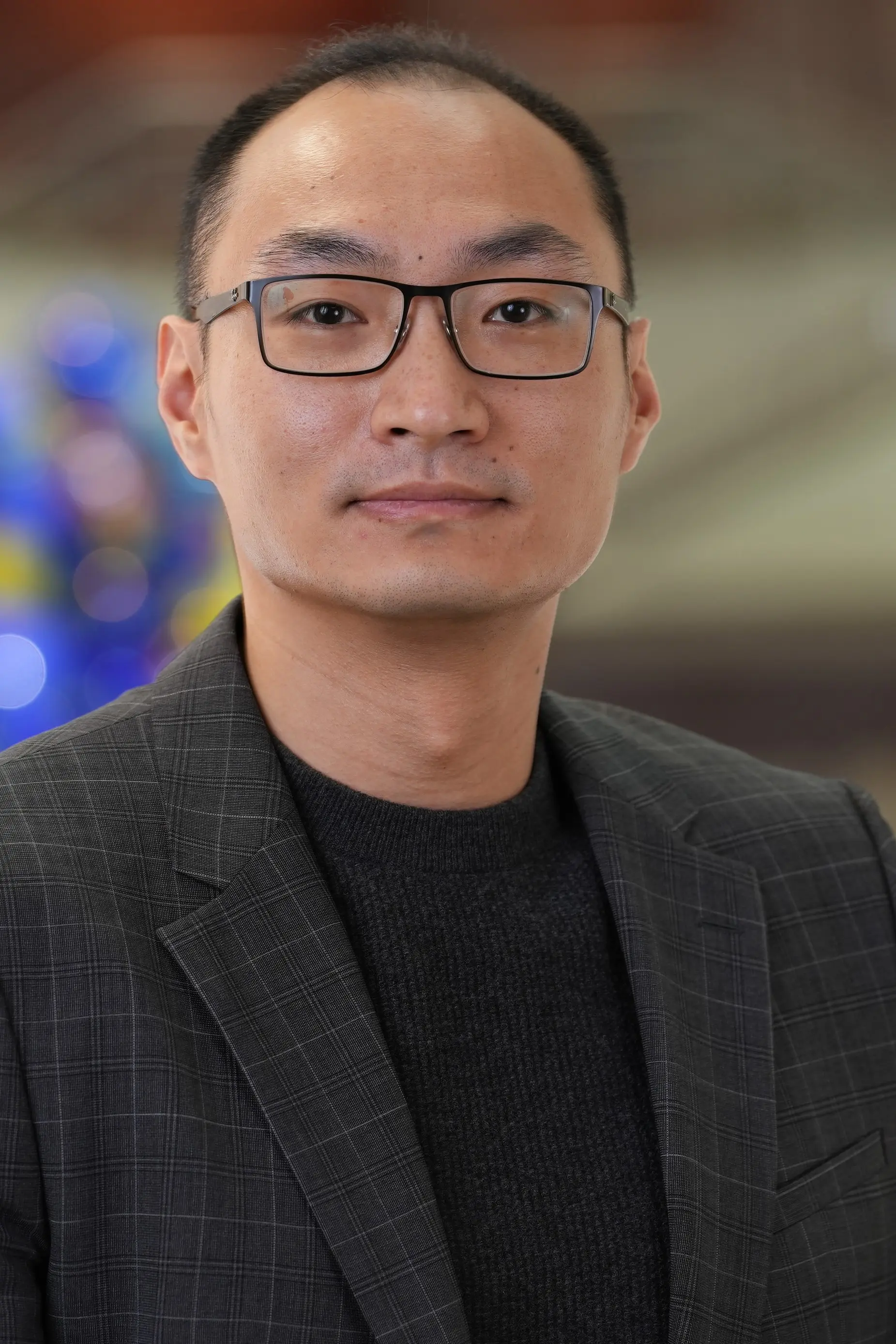
Menghao Huang, PhD
Assistant Research Professor of Biochemistry, Molecular Biology & Pharmacology
- Address
-
MS41017B
BIOM
IN
Indianapolis, IN - PubMed:
-

Bio
Menghao Huang, PhD is an Assistant Research Professor in the Department of Biochemistry, Molecular Biology & Pharmacology at the Indiana University School of Medicine. His research focuses on the molecular mechanisms underlying metabolic diseases, particularly metabolic dysfunction-associated steatotic liver disease (MASLD), obesity, type 2 diabetes, and related complications.
Dr. Huang received his PhD in Microbial and Biochemical Pharmacy from the Chinese Academy of Medical Sciences & Peking Union Medical College, and completed postdoctoral training at Indiana University School of Medicine. His work has centered on identifying stress-response regulators and epigenetic mechanisms that control metabolic homeostasis and disease progression.
His research has made significant contributions to understanding the roles of key regulators such as SIRT6, Sestrin 3 (Sesn3), ATG14, and PNPLA3 in liver metabolism, fibrosis, and tumorigenesis. By integrating in vivo mouse models with molecular and transcriptomic approaches, Dr. Huang has uncovered mechanisms linking oxidative stress, inflammation, and metabolic dysfunction.
Dr. Huang has received multiple awards, including the NIH NIDDK R01, Heartland Children’s Nutrition Initiative Award (Riley Children’s Foundation) and the Pilot and Feasibility Award from the Center for Diabetes and Metabolic Diseases at Indiana University, recognizing his innovative contributions to metabolic disease research.
Key Publications
?Menghao Huang? - ?Google Scholar?
My NCBI Collection 51106114 - PubMed
- Hazari Y, Habbouche L, Garcia Lopez VA, Urra H, Diaz J, Tamburini G, Milani M, Durand S, Aprahamian F, Baxter R, Huang M, Dong XC, Gonzalez-Rojas L, Silva-Agüero JF, Tapia-Dufey I, Vihinen H, Ratziu V, Foufelle F, Hengstler JG, Maiers JL, Plate L, Kroemer G, Bailly-Maitre B, Hetz C. Targeting the ER stress sensor IRE1 protects the liver from fibrosis through the downregulation of the proteostasis factor P4HB/PDIA1. Hepatology. 2026;83:75–93.
- Park J#, Lokuge SD#, Huang M#, Wang S, Liu S, Liang J, Katturajan R, Marakovits C, Yang Z, Wan J, Dong XC. SIRT6 is a key regulator of pancreatic β-cell survival and function during aging. Diabetes. 2025.
- Kim HG#, Huang M#, Wang S, Zhang Y, Li K, Liu S, Dong C, Yang X, Cho JH, Chowdhury K, Stein B, Wan J, Dong XC. Autophagy related 14 protects against liver injury by inhibiting multiple cell death pathways. eGastroenterology. 2025;3(4):e100181
- Huang M, Zhang Y, Park J, Chowdhury K, Xu J, Lu A, Wang L, Zhang W, Ekser B, Yu L, Dong XC. ATG14 plays a critical role in hepatic lipid droplet homeostasis. Metabolism. 2023;148:155693.
- Chowdhury K#, Huang M#, Kim HG, Dong XC. Sirtuin 6 protects against hepatic fibrogenesis by suppressing the YAP and TAZ function. FASEB J. 2022;36(10):e22529.
- Zhu C#, Huang M#, Kim HG, Chowdhury K, Gao J, Liu S, Wan J, Wei L, Dong XC. SIRT6 controls hepatic lipogenesis by suppressing LXR, ChREBP, and SREBP1. Biochim Biophys Acta Mol Basis Dis. 2021;1867(12):166249.
- Zhong X#, Huang M#, Kim HG, Zhang Y, Chowdhury K, Cai W, Saxena R, Schwabe RF, Liangpunsakul S, Dong XC. SIRT6 Protects Against Liver Fibrosis by Deacetylation and Suppression of SMAD3 in Hepatic Stellate Cells. Cell Mol Gastroenterol Hepatol. 2020;10(2):341-364.
- Huang M, Kim HG, Zhong X, Dong C, Zhang B, Fang Z, Zhang Y, Lu X, Saxena R, Liu Y, Zhang C, Liangpunsakul S, Dong XC. Sestrin 3 Protects Against Diet-Induced Nonalcoholic Steatohepatitis in Mice Through Suppression of Transforming Growth Factor β Signal Transduction. Hepatology. 2020;71(1):76-92.
- Liu Z, Zhang Y, Graham S, Wang X, Cai D, Huang M, Pique-Regi R, Dong XC, Chen YE, Willer C, Liu W. Causal relationships between NAFLD, T2D and obesity have implications for disease subphenotyping. J Hepatol. 2020;73(2):263-276
- Kim HG, Huang M, Xin Y, Zhang Y, Zhang X, Wang G, Liu S, Wan J, Ahmadi AR, Sun Z, Liangpunsakul S, Xiong X, Dong XC. The epigenetic regulator SIRT6 protects the liver from alcohol-induced tissue injury by reducing oxidative stress in mice. J Hepatol. 2019;71(5):960-969.
- Huang MH, Li H, Xue R, Li J, Wang L, Cheng J, Wu Z, Li W, Chen J, Lv X, Li Q, Lan P, Zhao L, Yang Y, Peng Z, Jiang J. Up-regulation of glycolipid transfer protein by bicyclol causes spontaneous restriction of hepatitis C virus replication. Acta Pharm Sin B. 2019;9(4):769-781.
- Huang M, Jiang JD, Peng Z. Recent advances in the anti-HCV mechanisms of interferon. Acta Pharm Sin B. 2014;4(4):241-247.
- Huang M, Qian Y, Guan T, Huang L, Tang X, Li Y. Different neuroprotective responses of Ginkgolide B and bilobalide, the two Ginkgo components, in ischemic rats with hyperglycemia. Eur J Pharmacol. 2012;677(1-3):71-76.
| Year | Degree | Institution |
|---|---|---|
| 2016 | PhD | Peking Union Medical College |
| 2012 | M.Sc. | China Pharmaceutical University |
| 2009 | BSC | China Pharmaceutical University |
Dr. Huang’s research focuses on elucidating the molecular and systemic mechanisms underlying metabolic dysfunction-associated steatohepatitis (MASH), type 2 diabetes (T2D), and obesity, with the goal of identifying novel therapeutic targets.
His work centers on how metabolic stress, inflammation, and epigenetic regulation drive disease progression across interconnected metabolic tissues, including liver, adipose tissue, and skeletal muscle. A major focus of his research is the role of stress-responsive and epigenetic regulators, such as SIRT6 and Sestrin 3, in coordinating lipid and glucose metabolism, oxidative stress responses, and inflammatory signaling pathways.
Dr. Huang investigates how dysregulation of these pathways contributes to key pathological features of metabolic disease, including hepatic steatosis, fibrosis, insulin resistance, and metabolic inflammation. His studies also explore the mechanistic links between MASH, T2D, and obesity, aiming to define shared molecular drivers that underlie disease comorbidity and progression.
In addition, his research examines the role of autophagy and cellular quality control mechanisms (e.g., ATG14) in maintaining metabolic homeostasis and preventing tissue injury. By integrating in vivo models, molecular biology, and transcriptomic analyses, his work seeks to uncover how inter-organ communication and cellular stress responses shape disease outcomes.
Ultimately, Dr. Huang’s research aims to translate mechanistic insights into therapeutic strategies for metabolic diseases, with particular interest in targeting inflammation, metabolic reprogramming, and tissue crosstalk in MASH, T2D, and obesity.
Desc: R01DK142872
Scope: National
Date: 2026-02-27
Desc: Heartland Children’s Nutrition Collaborative Award
Scope: Regional
Date: 2025-01-01
Desc: Pilot and Feasibility Award
Scope: University
Date: 2024-06-01