I wasn’t entirely sure what to expect when I was first accepted into medical school. I had an idea of which topics we would cover, the timeline of classroom work verus clinical rotations, and other information that’s widely available on the internet, but that’s very different than understanding what everyday life would be like as a medical student — especially as a disabled medical student. There’s not a lot of disability representation in the medical field, either in real life or in the media (though shout-out to “The Pitt”— Dr. Caleb Jefferson is a wheelchair user!), so I didn’t have many opportunities to learn how having a physical disability would impact my experiences over the next four years.
I can’t say I had nothing to worry about (medical school is hard!), but in general, I LOVED my first two years. It may have been more work than undergrad, but I found most of the curriculum so fascinating that I was very motivated to study it. That said, there was definitely a learning curve as I made the transition into medical school, and I’ve grown a lot, both as a student and as a person. Here are seven nonmedical lessons that I’ve learned in Phase 1 that I think will continue to help me grow moving forward into the clinical phase of medical school.
1. Stubbornness can be your best friend or your worst enemy.
Everyone has that one subject they just can’t wrap their head around, no matter how many times they study it. Sometimes you just have to sit down and work on it until you get it right (I once identified the muscles in every single forearm in the cadaver lab at like 5 a.m. on a Sunday, which was not exactly my idea of a good time, but it paid off come test day). Conversely, if you’ve been studying the same material for an hour and getting nowhere, you need to know when it’s time to move on. Don’t get so caught up in one topic that you don’t have time to study the rest of the material.
I feel like this applies in everyday life as well. I recently rolled 25 minutes across a city in my wheelchair, only to find that the elevator at my destination was broken. It took several minutes and I almost fell at least twice, but I got that wheelchair up an entire flight of stairs. This exemplifies both points — my stubbornness paid off (it was a really cool museum), but also, it would’ve been in my best interest to be a little less stubborn (I definitely should’ve asked for help).

2. Be a complete human, not just a student.
We’re not robots — we can’t study 24/7. It’s important to set boundaries and have things to do outside of school/medicine to keep us healthy, mentally and physically, and I often find that if I’m stuck on a certain concept or assignment, it feels much easier after I’ve taken a break to reset. During Phase 1, I liked to swim during ILT (Independent Learning Time) and play piano, read a nonmedical book, or spend time with friends during study breaks. I’ll have to change the timing of these activities during Phases 2 and 3 since I won’t be at home as much, but I still plan to incorporate them into my new routines.
3. Don’t let fear of failure stop you from taking advantage of new opportunities.
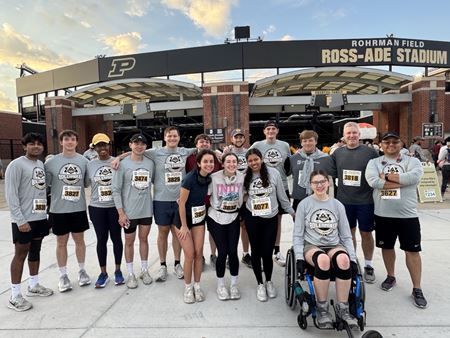
This is another one that applies both to medical school and to life in general. I’m a bit of a perfectionist, and one of the changes that’s enabled me to grow the most as a medical student and as a person over the last two years is understanding that I can’t let the perfect be the enemy of the good. I’ve really embraced trying new things, whether that be solo international travel, open-water swimming, doing a 5K in my wheelchair, or even just trying as many new foods as I can — and it’s been amazing! Of course, not every new venture will be successful, and I’ve had to learn how to be okay with that (see my next lesson!).
4. Dr. Pepper and Rice Krispies make an even worse combination than you would think.
Look, I get it. We’ve all had those mornings where we’re uncaffeinated and starving, but also running late. Sometimes there’s just not time to sit down for the nice, peaceful breakfast that we had planned. But I’m here to tell you that if you ever think, “Why not combine the food and the caffeine? It’ll be more time efficient. And surely the carbonation will enhance the snap, crackle, pop of the Rice Krispies to create an even more ‘distinct’ experience,” don’t fall for it. I have very few regrets when it comes to trying new things, but this is one of them.
5. Sometimes you can make your problems feel 95% better by taking a nap.
Unless your problem is sleep deprivation (which, in medical school, it very well may be), the nap probably isn’t going to solve it, per se, but at least for me, it has a high chance of making the problem feel more manageable.
6. Find a place where your peers have your back.
Skipping social events because there’s no accessibility information available about the activity or location is a common occurrence for many disabled people. (Access needs vary, but for me it tends to be things like: Do they have an elevator, and is it actually in service? Is there accessible parking nearby?). Since starting medical school, there have been multiple occasions where I’ve RSVP-ed to an event and a classmate has reached out to me with information about the accessibility of the location or the easiest way for me to get there. I didn’t ask or expect them to do that for me, but it gives me so much hope, not only in terms of my own ability to fully participate in these events, but also for the improved experiences that disabled patients will have with the next generation of doctors.
7. Make the most of the chance to explore.
I’m notoriously bad at navigation. Sometimes when I go to a new city, I get lost en route to one destination and end up stumbling upon a bookstore, bakery, museum, etc., that I never would’ve known about otherwise — and sometimes, those destinations end up being one of the highlights of my trip. I think medical school provides a similar opportunity. Whether we have an idea of what specialties interest us or not, we’re going to be exposed to so many new disciplines, both in the classroom and in our rotations, and if we keep an open mind, we may find new things that we enjoy. Even though I have an idea of what specialties I want to apply to, this exploration is what excites me most about moving into Phase 2.

Parting thoughts as I enter Phase 2
As I begin my rotations, I know I’ll miss seeing my classmates every day, but I look forward to the chance to interact with patients more independently and to learn about what each specialty is like in day-to-day life. Similar to when I started Phase 1, I’m not entirely sure what to expect, and I’d be lying if I said none of the rotations make me nervous, but I think the overall experience will be positive as I apply what I’ve learned so far, as well as the lessons that I’ll undoubtedly learn going forward.
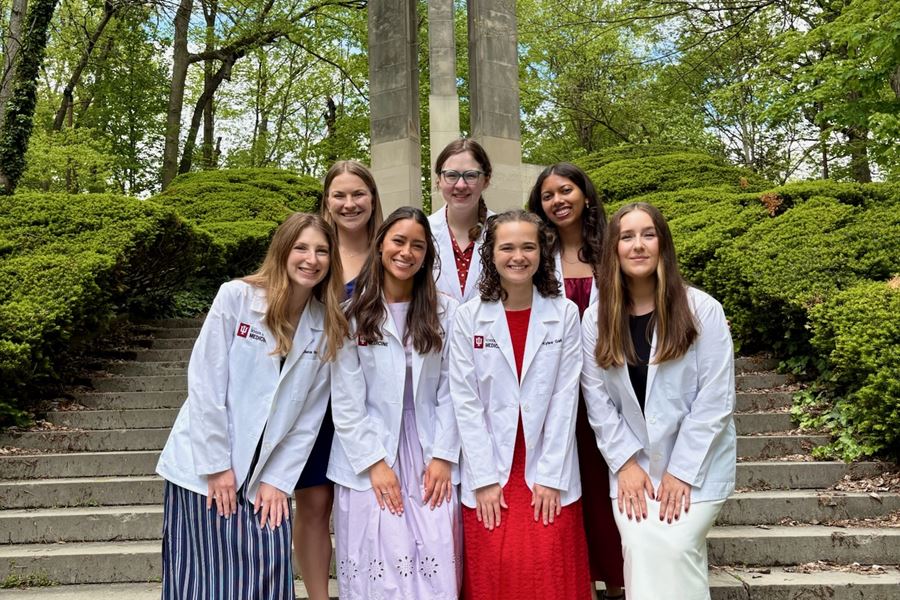
About this series: The Journey to MD series is following two Indiana University School of Medicine students throughout their four-year academic journeys as medical students, chronicling their experiences from orientation week through graduation. Sarah Vaught is at the IU School of Medicine—West Lafayette campus, and Mout-Maine Moustapha is on the Indianapolis campus. Read more stories about their medical school experiences.